结果文件解读
分析完成后,系统生成以下文件:
1. community.xml
这是合并后的群落基因组尺度代谢模型文件,采用SBML格式,可使用记事本打开查看。与单物种模型相比,群落模型的XML包含以下关键特征:
- 群落信息:模型ID为"community",包含群落级元数据
- 区室列表:包含共享的
ext(细胞外环境)区室,以及每个MAG独立的区室ext:群落共享细胞外环境(所有MAG共用)C_c_MAG_T21_45,C_p_MAG_T21_45:MAG_T21_45的胞质和周质空间C_c_MAG_T11_53,C_p_MAG_T11_53:MAG_T11_53的胞质和周质空间
- 物种列表:代谢物ID带有MAG后缀标识其所属物种,如
M_10fthf_c_MAG_T21_45表示MAG_T21_45胞质中的10-Formyltetrahydrofolate - 反应列表:反应ID带有MAG后缀,区分不同物种的代谢反应,如
R_AICART_MAG_T21_45;各物种的Biomass反应(Growth_*)产物指向community_biomass - 约束列表:定义各物种反应通量的上下限约束
以下是一个简化的群落SBML文件结构示例:
<?xml version="1.0" encoding="UTF-8"?>
<sbml xmlns="http://www.sbml.org/sbml/level3/version1/core" level="3" version="1">
  <model id="community">
    <listOfCompartments>
      <compartment id="ext" name="extracellular environment"/>
      <compartment id="C_c_MAG_T21_45" name="cytosol"/>
      <compartment id="C_p_MAG_T21_45" name="periplasm"/>
      <compartment id="C_c_MAG_T11_53" name="cytosol"/>
      <compartment id="C_p_MAG_T11_53" name="periplasm"/>
    </listOfCompartments>
    <listOfSpecies>
      <species id="community_biomass" name="Total community biomass" compartment="ext"/>
      <species id="M_10fthf_c_MAG_T21_45" name="10-Formyltetrahydrofolate" compartment="C_c_MAG_T21_45"/>
      <species id="M_h2o_c_MAG_T21_45" name="Water" compartment="C_c_MAG_T21_45"/>
      <species id="M_10fthf_c_MAG_T11_53" name="10-Formyltetrahydrofolate" compartment="C_c_MAG_T11_53"/>
    </listOfSpecies>
    <listOfReactions>
      <reaction id="R_AICART_MAG_T21_45" name="Phosphoribosylaminoimidazolecarboxamide formyltransferase" reversible="true">
        <listOfReactants>
          <speciesReference species="M_10fthf_c_MAG_T21_45" stoichiometry="1"/>
        </listOfReactants>
        <listOfProducts>
          <speciesReference species="M_fprica_c_MAG_T21_45" stoichiometry="1"/>
        </listOfProducts>
      </reaction>
      <reaction id="Growth_MAG_T21_45" name="Biomass reaction" reversible="false">
        <listOfReactants>
          <speciesReference species="M_10fthf_c_MAG_T21_45" stoichiometry="1"/>
          <speciesReference species="M_h2o_c_MAG_T21_45" stoichiometry="1"/>
        </listOfReactants>
        <listOfProducts>
          <speciesReference species="community_biomass" stoichiometry="1"/>
        </listOfProducts>
      </reaction>
    </listOfReactions>
  </model>
</sbml>
关键元素解读:
| 元素 | 描述 | 群落模型特有解读 |
|---|---|---|
| <species>(带MAG后缀) | 代谢物ID包含MAG标识,如M_10fthf_c_MAG_T21_45 |
区分不同物种的同名代谢物,分析种间代谢差异 |
| <reaction>(带MAG后缀) | 反应ID包含MAG标识,如R_AICART_MAG_T21_45 |
区分不同物种的代谢反应,比较物种间代谢能力 |
| <compartment id="ext"> | 群落共享的细胞外环境区室 | 模拟群落中微生物间的代谢物交换(交叉喂养) |
| community_biomass | 群落总生物量代谢物,位于ext区室 | 各物种的生长反应均贡献群落总生物量 |
| Growth_MAG_* 反应 | 各物种的生物量合成反应,产物为community_biomass | 反映物种对群落整体生长的贡献 |
2. community_network.svg
静态群落代谢网络图,以SVG矢量格式呈现,采用网格+同心圆混合布局:
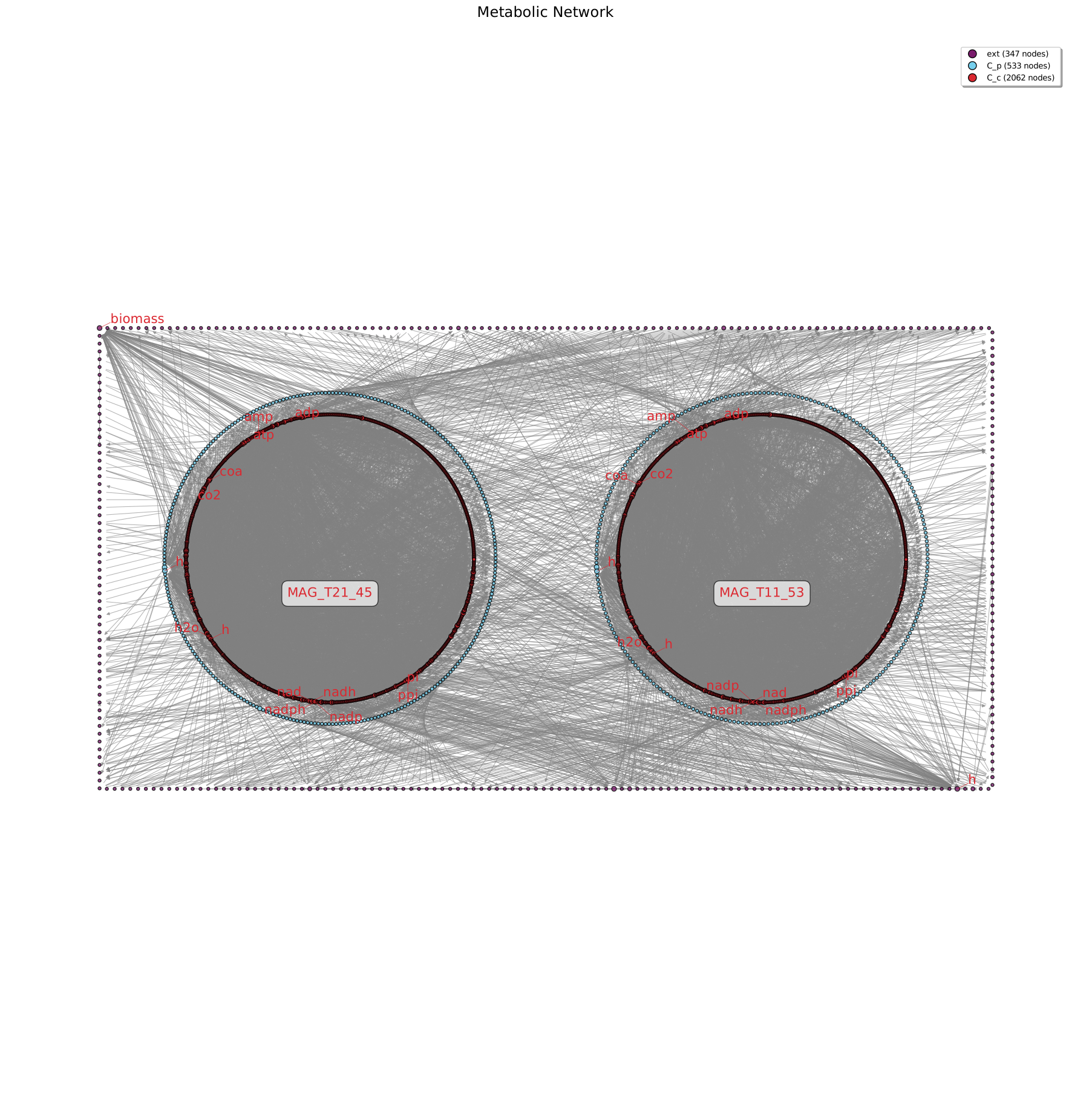
布局解读:
- 基因组网格排列:每个MAG占据网格中的一个位置,图中展示了2个MAG(MAG_T21_45和MAG_T11_53),各MAG下方标注基因组ID (MAG ID)
- MAG内部同心圆布局:每个MAG内部,胞质区室(C_c)节点位于内圈,周质空间(C_p)节点位于外圈
- ext节点外围分布:群落共享的细胞外环境(ext)代谢物节点分布在所有MAG外围的矩形框上,表示这些代谢物可为整个群落所用
- 节点:代表代谢物,颜色表示其所在区室类型,大小反映连接度
- 边:代表代谢反应,箭头方向表示反应方向;跨MAG的边表示潜在的种间代谢交互
- 连接度:节点大小反映其连接度(degree),即相连的边数;连接度高的节点代表代谢网络中的枢纽代谢物
3. community_nodes.xls
代谢物节点信息表,包含以下列:
| 列名 | 描述 | 示例 |
|---|---|---|
| id | 代谢物唯一标识符(MAG后缀标明所属物种);可能来自于 BiGG数据库 | M_10fthf_c_MAG_T21_45 |
| name | 代谢物名称 | 10-Formyltetrahydrofolate |
| compartment | 所在区室(MAG后缀标明物种,ext区室为群落共享) | C_c_MAG_T21_45 |
| degree | 连接度 | 13 |
示例数据(按degree降序展示高连接度节点):
                             id                              name        compartment  degree
0          community_biomass          Total community biomass                ext     106
1  M_10fthf_c_MAG_T21_45       10-Formyltetrahydrofolate  C_c_MAG_T21_45      13
2  M_12dgr140_c_MAG_T21_45  1,2-Diacyl-sn-... (n-C14:0)  C_c_MAG_T21_45       4
3  M_12dgr140_p_MAG_T21_45  1,2-Diacyl-sn-... (n-C14:0)  C_p_MAG_T21_45       3
4  M_12dgr160_c_MAG_T21_45  1,2-Diacyl-sn-... (n-C16:0)  C_c_MAG_T21_45       6
5  M_12dgr160_p_MAG_T21_45  1,2-Diacyl-sn-... (n-C16:0)  C_p_MAG_T21_45       3
本示例群落模型包含 2,942 个代谢物节点,其中:
- ext区室:347个节点(群落共享代谢物,含community_biomass,连接度106)
- MAG_T21_45:1,359个节点(C_c: 1,068; C_p: 291)
- MAG_T11_53:1,236个节点(C_c: 994; C_p: 242)
科研关注:高连接度代谢物(如community_biomass的degree=106)是代谢网络的枢纽节点,缺失将对群落代谢产生重大影响。ext区室中连接度高的代谢物代表种间交叉喂养的关键代谢物。
4. community_edges.xls
代谢反应边信息表,包含以下列:
| 列名 | 描述 | 示例 |
|---|---|---|
| source | 反应物代谢物ID(MAG后缀标识物种来源) | M_10fthf_c_MAG_T21_45 |
| target | 产物代谢物ID(MAG后缀标识物种归属) | M_fprica_c_MAG_T21_45 |
| reaction | 反应ID(MAG后缀标识所属物种) | R_AICART_MAG_T21_45 |
| reaction_name | 反应名称 | Phosphoribosylaminoimidazolecarboxamide formyltransferase |
| reversible | 是否可逆反应 | True |
示例数据:
                         source                     target                    reaction                           reaction_name  reversible
0  M_10fthf_c_MAG_T21_45  M_fprica_c_MAG_T21_45  R_AICART_MAG_T21_45  ...formyltransferase        True
1  M_10fthf_c_MAG_T21_45     M_thf_c_MAG_T21_45   R_GARFT_MAG_T21_45  ...formyltransferase        True
2  M_10fthf_c_MAG_T21_45    M_fgam_c_MAG_T21_45   R_GARFT_MAG_T21_45  ...formyltransferase        True
3  M_10fthf_c_MAG_T21_45       M_h_c_MAG_T21_45     Growth_MAG_T21_45  Biomass reaction          False
4  M_10fthf_c_MAG_T21_45     M_adp_c_MAG_T21_45     Growth_MAG_T21_45  Biomass reaction          False
5  M_10fthf_c_MAG_T21_45  community_biomass        Growth_MAG_T21_45  Biomass reaction          False
6  M_12dgr140_c_MAG_T21_45  M_adp_c_MAG_T21_45  R_DAGK140_MAG_T21_45  Diacylglyc... (n-C14:0)  False
本示例群落模型包含 13,499 条反应边。其中各MAG的生长反应(Growth_MAG_T21_45和Growth_MAG_T11_53)各对应259条边(连接大量前体代谢物),且均为不可逆反应(reversible=False),产物最终汇入community_biomass。
种间交互识别:在edges.xls中,若某条边的source或target中source和target的MAG后缀不同(或一方在ext区室),则该边可能表示物种间的代谢交互关系(交叉喂养/cross-feeding)。通过ext区室连接的边是分析群落代谢互作的核心线索。